
subcool
Well-Known Member
Properly processing the cannabis at harvest is a craft that must be mastered in order to enhance and preserve the psychoactive properties, the taste and the appearance of the finished product. Many talented growers fail to implement some of the following techniques and the result is not up to maximum potential. Inadequate or poor handling after harvest is the biggest cause of, less than top quality cannabis. This problem is compounded by the fact that most growers feel his or her pot is better than everyone elses. Try to tell a grower whom is your friend that he or she could do a better job on trimming and curing; this will usually result in the end of a friendship. A good trim and cure can make the difference between green tasting, hard to burn nugs and pleasurable, smooth, clean burning dank nugs.
There are two basic methods used by growers, when harvesting their cannabis. Some growers prefer to cut the buds from the branches individually, while others growers may prefer to harvest the entire plant, by cutting it off at the main stalk near the bottom.
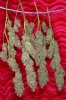
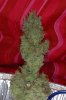
Many for a few reasons, prefer individual cola harvesting. With some cannabis plants the buds will finish at different times. For example; the top colas may be already ripe and can be removed to allow the lower branches to be exposed to light, therefore allowing the lower buds to further ripen giving a larger yield.
Individual harvesting and drying is faster than drying a whole harvested cannabis plant. When a cannabis plant is harvested the stomata on the surface of the leaves and calyxes will start closing off, allowing only a small amount of water vapors to escape through the stomata. Thus forcing the excess moisture stored within the stems/stalks to exit through the cuts you have made on the stalks/stems when harvesting. The less cuts for the water vapors to exit through, the longer the drying time will be.
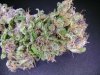
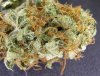
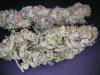
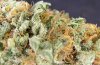
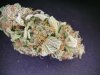
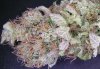
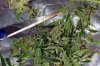
For the best end results we have found that upon harvest, it is best to trim all foliage from the colas/buds while the foliage is still rigid and fully hydrated. It is very important to remove as many leaves protruding from the bud, as possible. These leaves still contain chlorophyll, which will adversely affect the taste of your finished product. Some growers prefer to leave these leaves to curl around the bud for finished appearance. We feel that it will definitely take away from the taste and smoothness of the finished product.
There are two basic methods used by growers, when harvesting their cannabis. Some growers prefer to cut the buds from the branches individually, while others growers may prefer to harvest the entire plant, by cutting it off at the main stalk near the bottom.
Many for a few reasons, prefer individual cola harvesting. With some cannabis plants the buds will finish at different times. For example; the top colas may be already ripe and can be removed to allow the lower branches to be exposed to light, therefore allowing the lower buds to further ripen giving a larger yield.
Individual harvesting and drying is faster than drying a whole harvested cannabis plant. When a cannabis plant is harvested the stomata on the surface of the leaves and calyxes will start closing off, allowing only a small amount of water vapors to escape through the stomata. Thus forcing the excess moisture stored within the stems/stalks to exit through the cuts you have made on the stalks/stems when harvesting. The less cuts for the water vapors to exit through, the longer the drying time will be.
For the best end results we have found that upon harvest, it is best to trim all foliage from the colas/buds while the foliage is still rigid and fully hydrated. It is very important to remove as many leaves protruding from the bud, as possible. These leaves still contain chlorophyll, which will adversely affect the taste of your finished product. Some growers prefer to leave these leaves to curl around the bud for finished appearance. We feel that it will definitely take away from the taste and smoothness of the finished product.
Attachments
-
 114.1 KB Views: 2,486
 -
 101.8 KB Views: 2,061
 -
 139 KB Views: 1,873
 -
 77.2 KB Views: 1,996
 -
 98.3 KB Views: 2,006
 -
 104 KB Views: 1,594
 -
 99.2 KB Views: 1,421
 -
 68.5 KB Views: 1,498
 -
 89.2 KB Views: 1,287
 -
 68.7 KB Views: 1,443