Nicely done. Bookmarked.
Water is water right? Wrong. I see a lot of growers that have all this knowledge about nutrients and photoperiods but know very little about the water they use and that not all water is created equal and some water isn't very well suited for growing at all. I decided to do this thread to help educate growers about the water they use and why it's important to understand "The most essential compound".
What is "Hard Water"?
Perhaps you have on occassion noticed mineral deposits on your cooking dishes, or rings of insoluble soap scum in your bathtub. These are not signs of poor housekeeping, but are rather signs of hard water from the municipal water supply. Hard water is water that contains cations with a charge of +2, especially Ca2+ and Mg2+. These ions do not pose any health threat, but they can engage in reactions that leave insoluble mineral deposits. These deposits can make hard water unsuitable for many uses, and so a variety of means have been developed to "soften" hard water; i.e.,remove the calcium and magnesium ions.
Problems with Hard Water
Mineral deposits are formed by ionic reactions resulting in the formation of an insoluble precipitate. For example, when hard water is heated, Ca2+ ions react with bicarbonate (HCO3-) ions to form insoluble calcium carbonate (CaCO3), as shown in Equation 1.
(1)
This precipitate, known as scale, coats the vessels in which the water is heated, producing the mineral deposits on your cooking dishes. In small quantities, these deposits are not harmful, but they may be frustrating to try to clean. As these deposits build up, however, they reduce the efficiency of heat transfer, so food may not cook as evenly or quickly in pans with large scale deposits. More serious is the situation in which industrial-sized water boilers become coated with scale: the cost in heat-transfer efficiency can have a dramatic effect on your power bill! Furthermore, scale can accumulate on the inside of appliances, such as dishwashers, and pipes. As scale builds up, water flow is impeded, and hence appliance parts and pipes must be replaced more often than if Ca2+ and Mg2+ ions were not present in the water.
Some Strategies to "Soften" Hard Water
For large-scale municipal operations, a process known as the "lime-soda process" is used to remove Ca2+ and Mg2+ from the water supply. Ion-exchange reactions, similar to those you performed in this experiment, which result in the formation of an insoluble precipitate, are the basis of this process. The water is treated with a combination of slaked lime, Ca(OH)2, and soda ash, Na2CO3. Calcium precipitates as CaCO3, and magnesium precipitates as Mg(OH)2. These solids can be collected, thus removing the scale-forming cations from the water supply.
To see this process in more detail, let us consider the reaction for the precipitation of Mg(OH)2. Consultation of the solubility guidelines in the experiment reveals that the Ca(OH)2 of slaked lime is moderately soluble in water. Hence, it can dissociate in water to give one Ca2+ ion and two OH- ions for each unit of Ca(OH)2 that dissolves. The OH- ions react with Mg2+ ions in the water to form the insoluble precipitate. The Ca2+ ions are unaffected by this reaction, and so we do not include them in the net ionic reaction (Equation 2). They are removed by the separate reaction with CO32- ions from the soda ash.
(2)
Household water softeners typically use a different process, known as ion exchange. Ion-exchange devices consist of a bed of plastic (polymer) beads covalently bound to anion groups, such as -COO-. The negative charge of these anions is balanced by Na+ cations attached to them. When water containing Ca2+ and Mg2+ is passed through the ion exchanger, the Ca2+ and Mg2+ ions are more attracted to the anion groups than the Na+ ions. Hence, they replace the Na+ ions on the beads, and so the Na+ ions (which do not form scale) go into the water in their place.
Figure 1
When hard tapwater passes through the ion exchanger (left), the calcium ions from the tapwater replace the sodium ions in the ion exchanger. The softened water, containing sodium ions in place of calcium ions, can be collected for household use.
Unfortunately, many people with high blood pressure or other health problems must restrict their intake of sodium. Because water softened by this type of ion exchange contains many sodium ions, people with limited sodium intakes should avoid drinking water that has been softened this way. Several new techniques for softening water without introducing sodium ions are beginning to appear on the market.
343 You are not forgottenWater: The most essential compound
"The only thing necessary for the triumph of evil is for good men to do nothing"-Edmund Burke
Nicely done. Bookmarked.
METAL GROW SOLID (Grow Blog)Bagseed Tree Grow(COMPLETE)
Super Skunk 4th GROW(COMPLETE)
PERPETUAL GROW WITH LED AND HPS(COMPLETE)
Reverse Osmosis:
What is Osmosis?
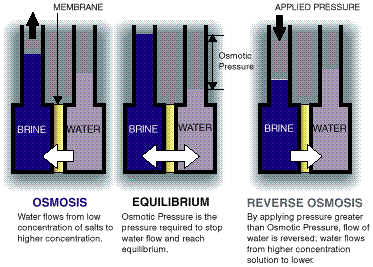
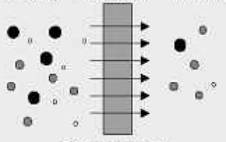
Osmosis is based upon the fundamental pursuit for balance. Two fluids containing different concentrations of dissolved solids that come in contact with each other will mix until the concentration is uniform. When these two fluids are separated by a semi permeable membrane (which lets the fluid flow through, while dissolved solids stay behind), the fluid containing the lower concentration will move through the membrane into the fluid containing the higher concentration of dissolved solids (Binnie e.a., 2002).
After a while the water level will be higher on one side of the membrane. The difference in height is called the osmotic pressure.
What is Reverse Osmosis?
By applying a pressure that exceeds the osmotic pressure, the reverse effect occurs. Fluids are pressed back through the membrane, while dissolved solids stay behind.
To purify water by Reverse Osmosis membrane, the natural osmosis effect must be reversed. In order to force the water of the brine stream (high salt concentration) to flow towards the fresh stream (low salt concentration), the water must be pressurized at an operating pressure greater than the osmotic pressure. As a result, the brine side will get more concentrated.
The operating pressure of seawater is around 60 bar.
1. Water flows from a column with a low dissolved solids content to a column with a high dissolved solids content
2. Osmotic pressure is the pressure that is used to stop the water from flowing through the membrane, in order to create balance
3. By pursuing pressure that exceeds the osmotic pressure, the water flow will be reversed; water flows from the column with a high dissolved solids content to the column with a low dissolved solids content
343 You are not forgottenWater: The most essential compound
"The only thing necessary for the triumph of evil is for good men to do nothing"-Edmund Burke
What is distilled water?
Distilled water is also called steam-distilled water. Distilled water is water which has been heated to the boiling point so that impurities are separated from the water, which becomes vapor or steam at 212 degrees farenheit(100C.). Steam is then cooled and condensed back into pure liquid form. The impurities remain as residue in the steam kettle(to be periodically removed). This distillation system removes waterborne biological contaminants such as bacteria, parasites and viruses, organic and inorganic chemicals, heavy metals, volatile gasses, cysts, and other contaminants. Pure water contains no solids, minerals, or trace elements. It is clean, natural, and healthy. Steam distilled water is the standard by which all other waters are measured.![]()
343 You are not forgottenWater: The most essential compound
"The only thing necessary for the triumph of evil is for good men to do nothing"-Edmund Burke
343 You are not forgottenWater: The most essential compound
"The only thing necessary for the triumph of evil is for good men to do nothing"-Edmund Burke
Deionization
Deionized water, also known as demineralized water[2] (DI water, DIW or de-ionized water; can also be spelled deionised water, see Spelling differences), is water that has had its mineral ions removed, such as cations from sodium, calcium, iron, copper and anions such as chloride and bromide. Deionization is a physical process which uses specially-manufactured ion exchange resins which bind to and filter out the mineral salts from water. Because the majority of water impurities are dissolved salts, deionization produces a high purity water that is generally similar to distilled water, and this process is quick and without scale buildup. However, deionization does not significantly remove uncharged organic molecules, viruses or bacteria, except by incidental trapping in the resin. Specially made strong base anion resins can remove Gram-negative bacteria. Deionization can be done continuously and inexpensively using electrodeionization.
Deionization does not remove the hydroxide or hydronium ions from water. These are the products of the self-ionization of water to equilibrium and therefore are impossible to remove.
Source: Wikipedia
343 You are not forgottenWater: The most essential compound
"The only thing necessary for the triumph of evil is for good men to do nothing"-Edmund Burke
Now that we've discussed the different types of water purification growers use I want to talk about some of the myths and facts about water.
A lot of people let their water sit out for a period of time, usually 24 hrs to a few days. Some people run an airstone in their water as they are letting it sit. This does a couple of things. Chlorine evaporates out of water pretty quickly since chlorine is a gas at room temp. An airstone can help this chlorine evaporate a little quicker and oxygenates the water at the same time. Letting water sit out doesn't do much to eliminate Chloramine. Chloramine is a newer chemical used to treat municipal water supplies. It's basically a combination of Chlorine and Ammonia. It doesn't evaporate so filtering with a brita or some other type of carbon filter is necessary to remove it. Reverse osmosis also removes chloramine.
Hard water is another problem many of us face. As discussed previously, hard water is basically dissolved Calcium and Magnesium ions. But these are elements needed by our plants you say. This is true but the problem is we don't really know how much of these elements are in our water. Too much of either can cause problems as well. You won't see it after one watering but over time these elements can build up in your soil or other medium and cause lockouts and all sorts of problems. You cannot reduce the hardness of water with a brita or similar carbon water filter. You can reduce water hardness by boiling it but how much it reduces the hardness is not clear and without proper laboratory testing equipment it is near impossible to know what and how much gets left behind. Steam distillation and reverse osmosis are the best methods for removing dissolved solids in water.
Why do I care how hard or pure my water is? Most of us don't give it a second thought, whether we are drinking it ourselves or watering our plants. In simple terms, the more "junk" that's in your water the less useable nutrients the plant will be able to take up through the roots. This is especially of concern to hydroponic growers.
It's also important to note that the hardness of your water can change dramatically throughout the year. For example, my municipal water supply is drawn from 4 different sources depending on the time of year and amount of rainfall. The sources municpal water companies draw from vary from wells to reservoirs so the water quality may not remain consistent depending on where the water is coming from. If using municipal tapwater it's not a bad idea to request a water analysis from your water company. Most water companies are required to provide this info on request, free of charge. It's also a good idea to check the tds periodically if you use tapwater that is borderline in hardness.
Last edited by doc111; 01-20-2010 at 10:57 AM.
343 You are not forgottenWater: The most essential compound
"The only thing necessary for the triumph of evil is for good men to do nothing"-Edmund Burke
What are Toal Dissolved Solids?
Where Do Dissolved Solids Come From?
- "Dissolved solids" refer to any minerals, salts, metals, cations or anions dissolved in water. This includes anything present in water other than the pure water (H20) molecule and suspended solids. (Suspended solids are any particles/substances that are neither dissolved nor settled in the water, such as wood pulp.)
- In general, the total dissolved solids concentration is the sum of the cations (positively charged) and anions (negatively charged) ions in the water.
- Parts per Million (ppm) is the weight-to-weight ratio of any ion to water.
- A TDS meter is based on the electrical conductivity (EC) of water. Pure H20 has virtually zero conductivity. Conductivity is usually about 100 times the total cations or anions expressed as equivalents. TDS is calculated by converting the EC by a factor of 0.5 to 1.0 times the EC, depending upon the levels. Typically, the higher the level of EC, the higher the conversion factor to determine the TDS. NOTE - While a TDS meter is based on conductivity, TDS and conductivity are not the same thing. For more information on this topic, please see our FAQ page.
Why Should You Measure the TDS Level in Your Water?
- Some dissolved solids come from organic sources such as leaves, silt, plankton, and industrial waste and sewage. Other sources come from runoff from urban areas, road salts used on street during the winter, and fertilizers and pesticides used on lawns and farms.
- Dissolved solids also come from inorganic materials such as rocks and air that may contain calcium bicarbonate, nitrogen, iron phosphorous, sulfur, and other minerals. Many of these materials form salts, which are compounds that contain both a metal and a nonmetal. Salts usually dissolve in water forming ions. Ions are particles that have a positive or negative charge.
- Water may also pick up metals such as lead or copper as they travel through pipes used to distribute water to consumers.
- Note that the efficacy of water purifications systems in removing total dissolved solids will be reduced over time, so it is highly recommended to monitor the quality of a filter or membrane and replace them when required.
The EPA Secondary Regulations advise a maximum contamination level (MCL) of 500mg/liter (500 parts per million (ppm)) for TDS. Numerous water supplies exceed this level. When TDS levels exceed 1000mg/L it is generally considered unfit for human consumption. A high level of TDS is an indicator of potential concerns, and warrants further investigation. Most often, high levels of TDS are caused by the presence of potassium, chlorides and sodium. These ions have little or no short-term effects, but toxic ions (lead arsenic, cadmium, nitrate and others) may also be dissolved in the water.
Even the best water purification systems on the market require monitoring for TDS to ensure the filters and/or membranes are effectively removing unwanted particles and bacteria from your water.
The following are reasons why it is helpful to constantly test for TDS:
Taste/HealthHigh TDS results in undesirable taste which could be salty, bitter, or metallic. It could also indicate the presence of toxic minerals. The EPA's rescommended maximum level of TDS in water is 500mg/L (500ppm). Filter performanceTest your water to make sure the reverse osmosis or other type of water filter or water purification system has a high rejection rate and know when to change your filter (or membrane) cartridges. HardnessHigh TDS indicates Hard water, which causes scale buildup in pipes and valves, inhibiting performance. Aquariums/AquacultureA constant level of minerals is necessary for aquatic life. The water in an aquarium or tank should have the same levels of TDS and pH as the fish and reef's original habitat. HydroponicsTDS is the best measurement of the nutrient concentration in a hydroponic solution. Pools and spasTDS levels must be monitored to prevent maintenance problems. Commercial/IndustrialHigh TDS levels could impede the functions of certain applications, such as boilers and cooling towers, food and water production and more. Colloidal silver waterTDS levels must be controlled prior to making colloidal silver. Coffee and Food ServiceFor a truly great cup of coffee, proper TDS levels must be maintained.
Car and window washingHave a washer with a spotless rinse? An inline dual TDS monitor will tell you when to change the filter cartridge or RO membrane.
*Chart values represent national U.S. averages. Actual TDS levels for geographic regions within the U.S. and other countries may vary.
Click here for the U.S. EPA's list of National Secondary Drinking Water Regulations.
Choose a TDS meter based on usage.
View differences between HM Digital handheld TDS/EC meters.
How Do You Reduce or Remove the TDS in Your Water?
Common water filter and water purification systems:
Carbon filtrationCharcoal, a form of carbon with a high surface area, adsorbs (or sticks to) many compounds, including some toxic compounds. Water is passed through activated charcoal to remove such contaminants. Reverse osmosis (R.O.)Reverse osmosis works by forcing water under great pressure against a semi-permeable membrane that allows water molecules to pass through while excluding most contaminants. RO is the most thorough method of large-scale water purification available. DistillationDistillation involves boiling the water to produce water vapor. The water vapor then rises to a cooled surface where it can condense back into a liquid and be collected. Because the dissolved solids are not normally vaporized, they remain in the boiling solution. Deionization (DI)Water is passed between a positive electrode and a negative electrode. Ion selective membranes allow the positive ions to separate from the water toward the negative electrode and the negative ions toward the positive electrode. High purity de-ionized water results. The water is usually passed through a reverse osmosis unit first to remove nonionic organic contaminants.
Source: HM Digital![]()
343 You are not forgottenWater: The most essential compound
"The only thing necessary for the triumph of evil is for good men to do nothing"-Edmund Burke
i have never seen this comprehensively covered..... sticky-ed
Go grow pot
343 You are not forgottenWater: The most essential compound
"The only thing necessary for the triumph of evil is for good men to do nothing"-Edmund Burke
Bookmarks