
Hormones vs Co2 - Hormones Cheaper Potentially Yeild the Same!
- Thread starter eza82
- Start date

eza82
Well-Known Member
SRY Champ!you ignored me... i just said that was possible what i was asking was...
im asking if you know what the go is if i just got some pre-made collodial silver???? they sell it in some shops and pharmacies..
thats the sort of like the method we use for pollinating bro
 Ive already smoked to much today! - I see what your saying .... you can buy a pre made and you wanna know if you could use that ?!?!? ..... I would assume yes and method I would use to be safe would 1:9+ distilled water......
Or even 1;1 stock soloution then mix that 1;9+
EDIT-------------------------------------
Collodial Silver id different form this Male induceing formula.... what you want is Silver Thiosulfate. Which is what is used in examples...
ie:
The silver nitrate solution (A) is then mixed into the sodium thiosulfate solution (B) while stirring rapidly. The resulting blend is stock silver thiosulfate solution (STS).

eza82
Well-Known Member
I don't know if this has been mentioned, I heard something about aspirin, I can't remember if they said it could prevent or cause hermaphroditing.
In the January, 2004 issue of The Avant Gardener, a monthly newsletter to which you can subscribe at Horticultural Data Processors, editor Thomas Powell notes that gardeners reported all sorts of plants growing remarkably better when given regular doses of tiny amounts of aspirin (1 part to 10,000 parts water; larger doses actually proved toxic), and that The Agricultural Research Service is investigating the reasons behind aspirins beneficial effects.

eza82
Well-Known Member
What would you do????????,
I have got a small issue with my new op....
had to reset the whole grow due to moving... I have started with 2 clones about 2 months ago..
Doing a 13 wk cycle ;2wk-clone, 4-wks veg, 8wks - flower.
I can fit 16 plants in Veg (2x2 e&B)- 200ml orchid pots
and the 2 flowering tables are 4x4 e&b - useing bigger pots
I have 4 Plants in flower....
2 of them r @ 4 wks
2 of them r @2wks
The problem: My mothers I vegged for a month and took 21 clones. I flowered .......(got impatient).....Hoping for at least 16 clones to take.... ended with 21 that took.
So hear lies the conudrem........
I have 21 in VEG All placed on the 29th JAN (around 15days)
&
No mothers...... Genrally It will take 1 1/2 mth to generate a mother from cloneing.
No clones - because no mothers (will pull them out of current veging plants)
So I should be takeing clones on the 15th march.
I plan on takeing 4 per week or 8 per fortnight... and the system is setup so... 13 stages for 4 palnts.
THE QUESTION:
the 21 plants in veg have to orginzed so they all dont go through at once.
My thoughts was to grab 4 per week and place them into flower.... BUT by March 28th I would still have 9 of the orginal clones which would be HUGE.(2mths of veg) I know 3 of them will end up mothers...
So that leaves 6 with no where to go........(with out over loading the system) (and I dont want to kill) what would you suggest.....
either spark the second flower table & Flower the extra 6 now ? OR just let them go in veg for two months.... Dont forget I need HIEGHT consistancy...for the lights..
What would be your soloution ???????
I have got a small issue with my new op....
had to reset the whole grow due to moving... I have started with 2 clones about 2 months ago..
Doing a 13 wk cycle ;2wk-clone, 4-wks veg, 8wks - flower.
I can fit 16 plants in Veg (2x2 e&B)- 200ml orchid pots
and the 2 flowering tables are 4x4 e&b - useing bigger pots
I have 4 Plants in flower....
2 of them r @ 4 wks
2 of them r @2wks
The problem: My mothers I vegged for a month and took 21 clones. I flowered .......(got impatient).....Hoping for at least 16 clones to take.... ended with 21 that took.
So hear lies the conudrem........
I have 21 in VEG All placed on the 29th JAN (around 15days)
&
No mothers...... Genrally It will take 1 1/2 mth to generate a mother from cloneing.
No clones - because no mothers (will pull them out of current veging plants)
So I should be takeing clones on the 15th march.
I plan on takeing 4 per week or 8 per fortnight... and the system is setup so... 13 stages for 4 palnts.
THE QUESTION:
the 21 plants in veg have to orginzed so they all dont go through at once.
My thoughts was to grab 4 per week and place them into flower.... BUT by March 28th I would still have 9 of the orginal clones which would be HUGE.(2mths of veg) I know 3 of them will end up mothers...
So that leaves 6 with no where to go........(with out over loading the system) (and I dont want to kill) what would you suggest.....
either spark the second flower table & Flower the extra 6 now ? OR just let them go in veg for two months.... Dont forget I need HIEGHT consistancy...for the lights..
What would be your soloution ???????
eza82
Well-Known Member
Ive looked at it before there is a close relative to Auxin hormone in them you right they probably would have a hand in preventing moulds..... but still I would not....... you are better off useing H2o2.hm.. interesting. I know aspiring in a bouquet of flowers preserves them for like a week longer.
Maybe it could preserve or fight against mold.
These are just really cheap ways of fucking with your chemical balances, which inturn will effect the hormones....
Stick with plant type additives...IMO

Jester88
Well-Known Member
do the indoor outdoor systemWhat would you do????????,
I have got a small issue with my new op....
had to reset the whole grow due to moving... I have started with 2 clones about 2 months ago..
Doing a 13 wk cycle ;2wk-clone, 4-wks veg, 8wks - flower.
I can fit 16 plants in Veg (2x2 e&B)- 200ml orchid pots
and the 2 flowering tables are 4x4 e&b - useing bigger pots
I have 4 Plants in flower....
2 of them r @ 4 wks
2 of them r @2wks
The problem: My mothers I vegged for a month and took 21 clones. I flowered .......(got impatient).....Hoping for at least 16 clones to take.... ended with 21 that took.
So hear lies the conudrem........
I have 21 in VEG All placed on the 29th JAN (around 15days)
&
No mothers...... Genrally It will take 1 1/2 mth to generate a mother from cloneing.
No clones - because no mothers (will pull them out of current veging plants)
So I should be takeing clones on the 15th march.
I plan on takeing 4 per week or 8 per fortnight... and the system is setup so... 13 stages for 4 palnts.
THE QUESTION:
the 21 plants in veg have to orginzed so they all dont go through at once.
My thoughts was to grab 4 per week and place them into flower.... BUT by March 28th I would still have 9 of the orginal clones which would be HUGE.(2mths of veg) I know 3 of them will end up mothers...
So that leaves 6 with no where to go........(with out over loading the system) (and I dont want to kill) what would you suggest.....
either spark the second flower table & Flower the extra 6 now ? OR just let them go in veg for two months.... Dont forget I need HIEGHT consistancy...for the lights..
What would be your soloution ???????


eza82
Well-Known Member
Mrs big (7ft`er) - she is going to have colias (4) the size of my arm..... lol
Very perddyy......... I have not seen them in a few days they are coming along nicely.. Just got hit with a big dose of PK 13-14 and Pot ash (potassium sulphate)
So I expect they will thincken up alittle now.....
Very perddyy......... I have not seen them in a few days they are coming along nicely.. Just got hit with a big dose of PK 13-14 and Pot ash (potassium sulphate)
So I expect they will thincken up alittle now.....
eza82
Well-Known Member
owwwwww your making me feel warm and fuzzy .....lolI'll probably still be here in two months bro.

eza82
Well-Known Member
-----any critisim ???
part 4 # MY THEORY ! THE FORMULA FOR GROWING BIG FAT STINKY FEMALES...................
The entire plant contains several hundred known elements/chemicals/hormones/vitimins etc
But the sexual expression & cannibinods of cannibis is determined by its genetic makeup, and by its metabolic temper.
Which is regulated by the male enzyme andrase and the female enzyme gynase.
Environmental & atmosphereic conditions (minerals,light, nutrients, soil and water) are keys and may suppress (through ABA) or induce the formation of the dominant enzymes and hormones, and allow the opposite sex to express itself partially (hermaphroditism) or completely as a THC bleeding beautiful lady.
Transition of female cannibis plants from the vegetative to the flowering phase is associated with a rise in Phos and cytokinin level, while that of male proceeds at a decreasing cytokinin level with an increase in Nitrogen.
The activity of cytokinins,avalablity of Gibberellin and level of PHOS are all associated with an enhancement of the female tendency/attributes.
eza82
Well-Known Member
Bonsi- thought I would post here as well..... i like looking at them....lol
I have Just started to make my own bonsi about 1 1/2 yrs ago..... From JUNIPER PINE....


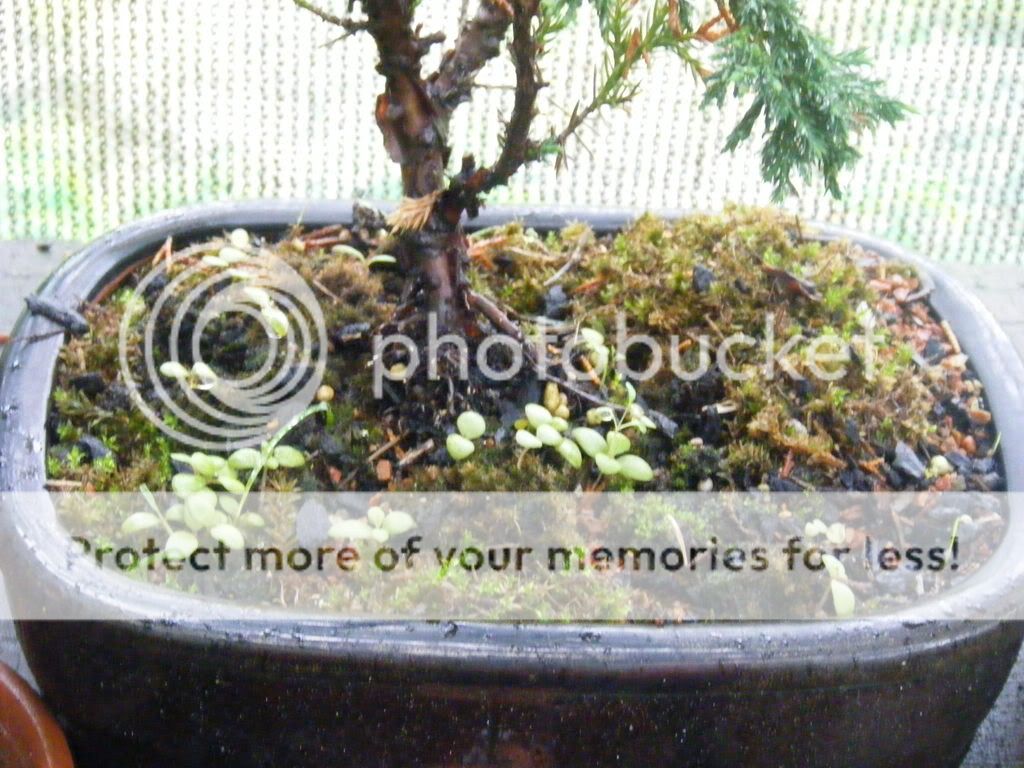
Here is my experiment bonsi- BONSI ON A ROCK.........
Under the soil is a rock.... plant has been placed over the top and filled in..... Each month Ill take alittle bit more soil.... Eventually the roots will run down the rock into soil below... Fully exposing the root and base of tree on top of the rock.....
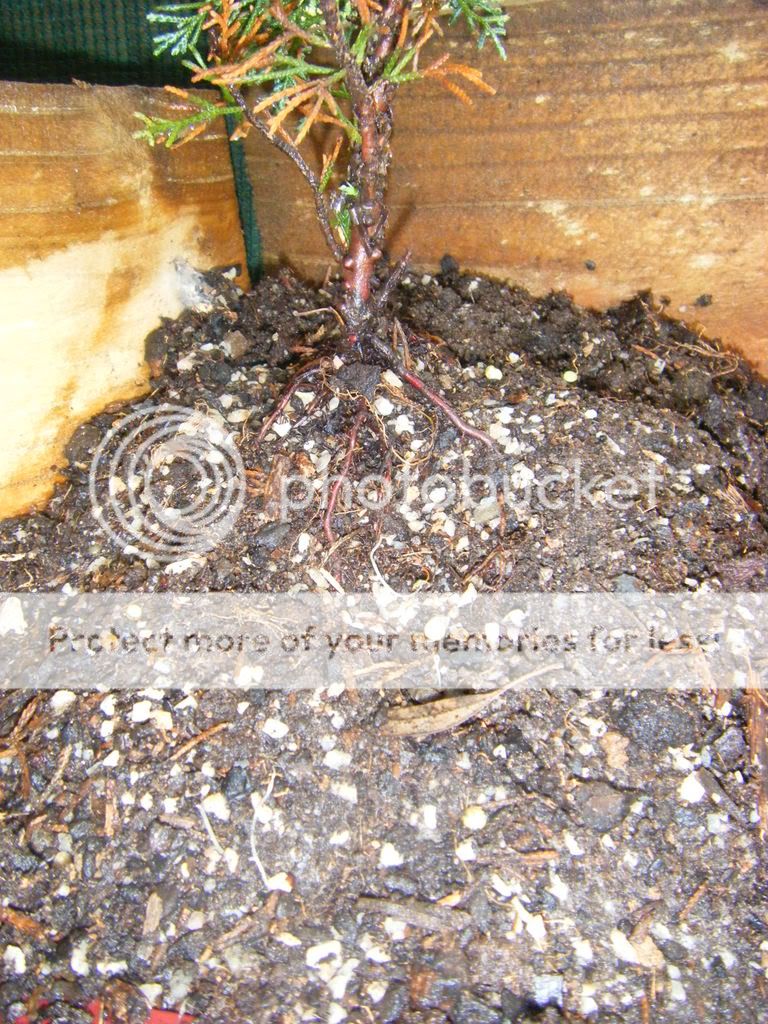

Been going for about 4mths that one!

Getting there SLOWLY......
I have Just started to make my own bonsi about 1 1/2 yrs ago..... From JUNIPER PINE....
Here is my experiment bonsi- BONSI ON A ROCK.........
Under the soil is a rock.... plant has been placed over the top and filled in..... Each month Ill take alittle bit more soil.... Eventually the roots will run down the rock into soil below... Fully exposing the root and base of tree on top of the rock.....
Been going for about 4mths that one!
Getting there SLOWLY......
eza82
Well-Known Member
I have one that sprouted outdoors about 4mths ago and is still only 6cm tall.... so it will be going into a bonsi pot and kept alive for a yr or two.....shoulda used a mully lol
lol and it is showing flower to ! Little mutant !